
Minecraft Building Ideas: Creative Builds, Survival Bases and Design Tips
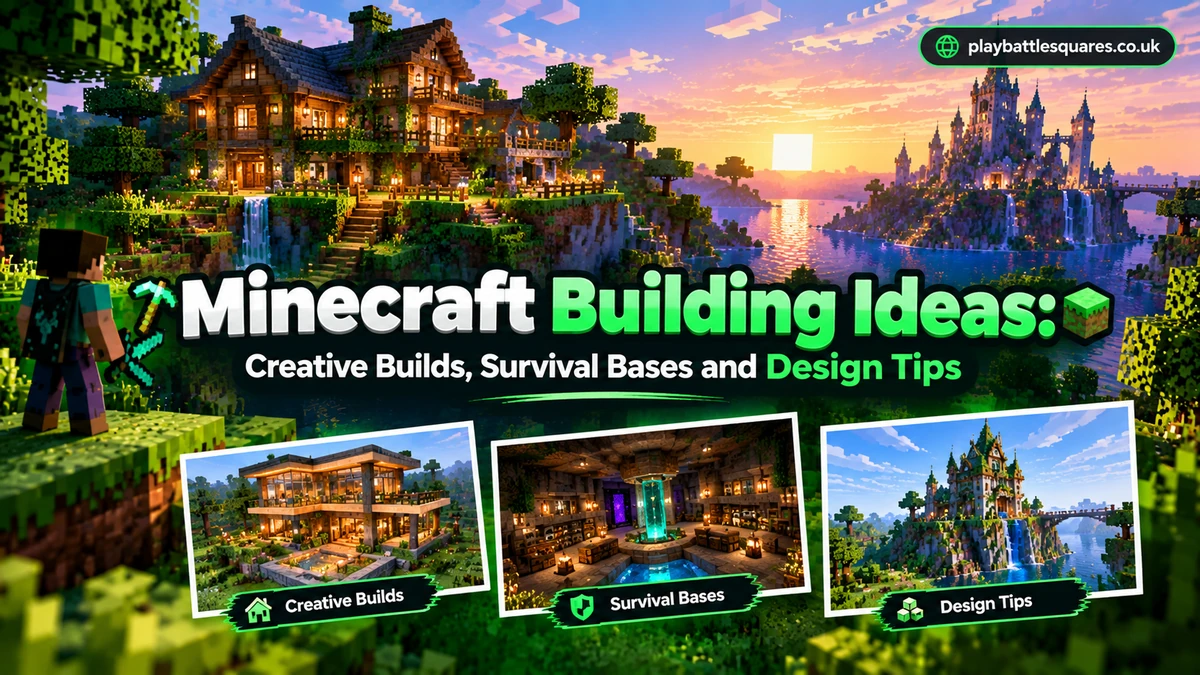
Minecraft Building Ideas can help you turn an ordinary world into something memorable, whether you are building your first survival shelter or designing a massive creative-mode city. From cosy wooden cottages and modern houses to underground bases, medieval castles and automated farms, the best projects combine creativity with practical design. On PlayBattleSquares.co.uk, this guide explores building inspiration, useful block combinations and step-by-step tips to help you create structures that look impressive and work well in your Minecraft world.
What Makes a Great Minecraft Build?
A great Minecraft build is more than a collection of blocks. It has a clear purpose, a suitable location and a design that makes sense within its surroundings. A small survival house can be just as impressive as a huge castle when its proportions, colours and details are carefully planned.
Before starting a project, consider how you will use the structure. A survival base needs storage, crafting areas and protection, while a creative-mode build can focus more on appearance, scale and decorative features. Planning these details early helps you avoid awkward layouts and unnecessary rebuilding.
Here are a few principles to keep in mind:
- Choose a purpose: Decide whether the build is for survival, decoration, farming, exploration or role-playing.
- Plan the shape: Start with a simple outline before adding walls, roofs and windows.
- Mix materials: Combine complementary blocks to create contrast and texture.
- Add depth: Use stairs, slabs, fences, trapdoors and walls to break up flat surfaces.
- Improve the surroundings: Paths, trees, gardens and lighting make structures feel connected to the world.
Best Minecraft Building Ideas for Every Player
There are countless ways to approach a building project in Minecraft. Beginners may prefer compact houses that use common resources, while experienced builders might enjoy large castles, detailed cities or complex underground structures.
The following ideas cover different styles, difficulty levels and purposes, making it easier to choose a project that matches your skills and available materials.
1. Modern Minecraft House
A modern house is a great choice if you enjoy clean lines, large windows and simple geometric shapes. Use white concrete, smooth quartz, glass panes and dark oak or spruce to create a striking contrast. Flat roofs, balconies and open-plan rooms help give the structure a contemporary appearance.
You can make the design more interesting by building separate sections at different heights. Add a swimming pool, a landscaped garden or an outdoor seating area to complete the property. For a survival version, replace expensive materials with stone, stripped logs or other blocks you can collect easily.
2. Medieval Castle
Medieval castles are ideal for players who want a large, detailed construction project. Stone bricks, cobblestone, deepslate and spruce wood work well for towers, walls, gates and defensive structures.
Start with the outer wall and corner towers before adding the main hall, courtyard and entrance. You can also include a throne room, armoury, library and underground escape tunnel. Varying the height of the towers and using different stone textures will make the castle look more realistic.
3. Small Survival Starter House
A starter house is one of the most practical projects for a new survival world. It should be quick to build, inexpensive and large enough for a bed, crafting table, furnace and basic storage.
Oak planks, spruce logs, glass panes and cobblestone make a reliable combination. Build a compact rectangular base, add a sloped roof and leave space for future expansion. Once you have collected more resources, you can add a second floor, an enchanting room or a larger storage area.
4. Underground Minecraft Base
An underground base is useful when you want a discreet shelter with plenty of room to expand. You can build it beneath a mountain, inside a hillside or deep underground, depending on your preferred location.
Create separate rooms for storage, crafting, farming and enchanting. Glass ceilings can bring natural light into sections close to the surface, while lanterns and glowstone can illuminate deeper areas. In survival mode, plan safe access routes and check for caves or other hazards before digging large chambers.
5. Treehouse in a Forest
A treehouse combines natural scenery with creative construction. Find a tall tree or build your own trunk using logs, then add wooden platforms, ladders and bridges between nearby trees.
Spruce planks, jungle wood, fences and trapdoors suit a forest setting. You can include several small rooms, a balcony, hanging lanterns and a rope-bridge-style walkway made from wood and fences. If the surrounding trees are too small, create custom trees with thick trunks and broad leaf canopies.
6. Minecraft Farmhouse
A farmhouse is a practical choice for players who enjoy agriculture and peaceful rural builds. Combine a wooden house with crop fields, animal pens, a barn and a small windmill or watermill for a complete countryside setting.
Use oak logs, stripped spruce, stone foundations and hay bales to create a rustic appearance. Divide crops into organised plots and add water channels where needed. Fences, paths, composters and lanterns provide useful details without requiring rare resources.
7. Japanese-Inspired House
Japanese-inspired builds often use layered roofs, wooden frames, open verandas and carefully arranged gardens. Dark oak, spruce, bamboo, white concrete and stone can help create a balanced colour palette.
Build a raised wooden floor, add a broad roof with stairs and slabs, and surround the house with bamboo, ponds or a small stone pathway. The design works particularly well in cherry groves, forests and mountain landscapes. Keep the exterior balanced rather than adding too many decorative blocks.
8. Mountain Base
A mountain base makes use of the natural terrain instead of requiring a completely flat building site. You can create a house built into the cliff, a glass-fronted observation room or a series of connected chambers carved into the mountain.
Stone, deepslate, spruce and glass suit this style. Large windows can provide views of the surrounding landscape, while balconies and bridges connect different sections. Make sure entrances and pathways are safe to navigate, especially if you use the base in survival mode.
Minecraft Building Ideas by Difficulty
Not every project requires advanced building skills or rare blocks. Choosing a suitable difficulty level helps you finish your build and learn new techniques along the way.
| Build idea | Difficulty | Suggested materials | Main purpose |
|---|---|---|---|
| Starter house | Easy | Oak, cobblestone, glass | Early survival shelter |
| Small farm | Easy | Fences, wood, dirt | Food and resources |
| Watchtower | Easy–Medium | Stone bricks, spruce | Views and decoration |
| Treehouse | Medium | Logs, planks, leaves | Creative shelter |
| Modern mansion | Medium | Concrete, glass, quartz | Large residential build |
| Japanese-style house | Medium | Spruce, bamboo, stone | Decorative home |
| Medieval castle | Hard | Stone bricks, deepslate | Large-scale construction |
| Fantasy city | Hard | Mixed stone, wood, glass | Creative world project |
| Underground megabase | Hard | Stone, lighting blocks, glass | Complex survival base |
Use this table as a starting point rather than a strict rule. Your available resources, chosen Minecraft edition and personal building experience will affect how difficult each project feels.
Creative Minecraft Building Ideas for Unique Worlds
Creative mode removes many resource restrictions, allowing you to experiment with unusual shapes, floating structures and large decorative projects. It is particularly useful for testing a design before gathering materials for a survival version.
Floating Island
Create a floating island with a grassy surface, hanging stone underneath and waterfalls flowing into the air. Build a small house, a garden or a fantasy temple on top to give the island a clear identity.
Vary the island’s shape rather than making it a perfect circle. Add smaller floating rocks nearby, use vines along the underside and connect separate islands with bridges. The result can become a complete sky village or a dramatic centrepiece for a creative world.
Fantasy Wizard Tower
A wizard tower works well with unusual shapes, pointed roofs and glowing details. Build a narrow stone tower with several floors, then add balconies, bookshelves, coloured glass and a magical-looking entrance.
You can create an enchanting room, potion laboratory and observatory inside. Purple, dark blue, stone and wood make a suitable palette, while amethyst and lighting blocks provide additional atmosphere.
Large Minecraft City
A city is a long-term project that allows you to combine many architectural styles in one world. Begin with a small district rather than attempting to construct an entire city at once.
Plan roads, pavements, parks and building plots before adding individual structures. Include shops, apartments, offices, a train station and residential streets. Repeating a few materials throughout the city creates visual consistency, while changing building heights and facades prevents the streets from looking identical.
Aquarium or Zoo
An aquarium or zoo adds an interactive attraction to a creative world. For an aquarium, use glass walls, underwater tunnels and carefully designed aquatic habitats. For a zoo, create spacious enclosures with vegetation, terrain and suitable environmental details.
Think about animal welfare in the design of your Minecraft world by avoiding cramped displays and providing room for movement. Separate habitats clearly and use paths, signs and viewing areas to make the attraction easier to explore.
Useful Block Combinations for Better Builds
The materials you choose can change the entire appearance of a structure. Blocks do not need to match perfectly; they should complement one another and create enough contrast to make important features stand out.
| Building style | Main blocks | Accent blocks |
|---|---|---|
| Modern | White concrete, glass | Blackstone, dark oak |
| Medieval | Stone bricks, cobblestone | Spruce, iron bars |
| Rustic cottage | Oak planks, logs | Bricks, leaves |
| Japanese-inspired | Spruce, bamboo | White concrete, stone |
| Fantasy | Deepslate, dark oak | Amethyst, coloured glass |
| Mountain retreat | Stone, spruce | Glass, lanterns |
| Desert home | Sandstone, terracotta | Acacia, smooth sandstone |
For a more polished appearance, combine blocks with different textures rather than relying on a single material. For example, a stone wall can use regular stone bricks as its main surface, cracked stone bricks for variation and stairs or slabs around the edges.
You can also use stripped logs to create cleaner wooden supports, trapdoors for shutters and slabs to create thinner ledges. These small changes often make a simple house look much more carefully designed.
How to Build a Minecraft House Step by Step
If you are unsure where to begin, a small house is an excellent way to practise layout, roofing and decoration. You can apply the same process to larger structures once you understand how the parts fit together.
Step 1: Choose the Location
Look for a relatively flat area near useful resources. A riverbank, forest clearing or open plain can provide enough room for a house, garden and storage area.
Consider the view and the surrounding terrain as well as convenience. A location beside a hill can provide extra protection and create opportunities for an expanded base later.
Step 2: Create the Foundation
Mark out a rectangular or L-shaped footprint using temporary blocks. A compact design around seven blocks wide and nine blocks long is a reasonable starting point, although the ideal dimensions depend on your intended layout.
Use stone or logs around the perimeter to establish the foundation. Leave a suitable space for the entrance and decide where windows will go before building the walls.
Step 3: Build the Walls and Roof
Raise the walls using your main building material and add contrasting blocks at the corners. Leave openings for windows and use glass panes to bring daylight into the interior.
A sloped roof made from stairs often suits a traditional wooden house. Extend the roof slightly beyond the walls to create overhangs and use slabs to soften the edges.
Step 4: Add Interior Features
Place a bed, crafting table, furnace, chests and lighting inside the house. Keep frequently used items near the entrance or crafting area so that the space remains practical during survival gameplay.
Add shelves, barrels, carpets, paintings or flowerpots if you have room. Avoid filling every corner with decoration; leaving clear pathways makes a small interior easier to use.
Step 5: Improve the Exterior
Finish the project by adding a path, garden, fence or small porch. Use lanterns or other suitable light sources to make the entrance easier to find after dark.
Step back and inspect the house from different angles. If a wall looks too flat, add supports, shutters or a small window. If the roof feels too heavy, adjust its height or change the material.
Common Building Mistakes to Avoid
Even an ambitious build can look unfinished when its proportions and details are not planned carefully. Fortunately, most common problems can be fixed without starting again.
Watch out for these mistakes:
- Using too many block types: Choose a small palette and introduce extra materials only where they improve the design.
- Making every wall flat: Add depth with supports, recessed windows, stairs and contrasting textures.
- Ignoring the roof: Roofs have a major influence on a building’s overall shape, so plan them alongside the walls.
- Forgetting lighting: Place suitable light sources around entrances, paths and important interior areas.
- Building without a layout: Sketch the footprint and decide where rooms or functional areas belong before constructing the walls.
- Leaving the surroundings empty: Trees, gardens, paths and terrain changes help a structure feel like part of the world.
- Choosing an oversized first project: Finish a manageable build before moving on to a castle or city.
You do not need to make every structure perfect on the first attempt. Experimenting with shapes and materials is part of learning how to build effectively in Minecraft.
Survival Building Tips for Collecting Resources
Survival builds require more planning because every block must be collected or crafted. Before starting a large project, estimate how much wood, stone, glass and other materials you will need, then gather extra supplies for adjustments.
Build a temporary storage area near the construction site to keep materials organised. If the project is far from your main base, consider making a small shelter with a bed and crafting facilities nearby. This reduces unnecessary travel and helps you work more efficiently.
For larger projects, divide the construction into manageable stages:
- Gather the main building materials.
- Prepare the terrain and foundation.
- Complete the walls and structural supports.
- Build the roof and install windows.
- Add storage, crafting stations and other functional features.
- Finish the exterior and surrounding landscape.
Prioritise essential rooms and protection when building in survival mode. Decorative details can be added later, once you have a dependable supply of food, tools and materials.
Frequently Asked Questions
What are the best Minecraft Building Ideas for beginners?
Small starter houses, simple farms, watchtowers and compact cottages are excellent beginner projects because they use accessible materials and straightforward designs.
What should I build first in Minecraft survival mode?
Start with a secure shelter containing a bed, crafting table, furnace, storage and sufficient lighting before moving on to larger projects.
How can I make my Minecraft house look better?
Combine complementary blocks, add depth around windows, use a varied roof design and improve the surrounding area with paths, plants and lighting.
What are some cool Minecraft builds for creative mode?
Floating islands, modern mansions, fantasy towers, medieval castles and large cities offer plenty of opportunities to experiment with scale and design.
Which blocks are best for building a modern Minecraft house?
White concrete, glass, smooth quartz, dark oak and blackstone are useful choices for creating clean lines and contrasting architectural features.
How do I plan a large Minecraft building project?
Start with a sketch or block outline, choose a limited material palette, estimate resource requirements and divide the project into smaller construction stages.
Can I use the same building ideas in Minecraft Java and Bedrock Edition?
Most architectural ideas work in both editions, although certain mechanics, block behaviour and available features may differ depending on the version.
How do I find inspiration for new Minecraft builds?
Explore different biomes, experiment with block combinations, observe real-world architecture and adapt familiar structures to suit your own Minecraft world.
Disclaimer: PlayBattleSquares.co.uk is an independent gaming information website. Minecraft is a game developed by Mojang Studios, and this article is intended for general inspiration and educational purposes. Building examples and material suggestions may vary depending on the game edition, version and available features. This website does not claim official affiliation with Mojang Studios or Microsoft.